

If you landed on this page by searching for “Bill C-3,” “getting Canadian citizenship,” “getting a Canadian citizenship,” or “questions Canadian citizenship,” you are not alone. Many people are now asking whether a parent, grandparent, or even earlier Canadian ancestor could make them eligible for Canadian citizenship by descent. As a genealogy society, we have seen growing interest in this question, especially from people trying to document an ancestor’s birth, baptism, marriage, or residence in Canada. Our society discussed the uptick in requests we’ve seen with Buffalo’s Spectrum 1 News. Our role is not to give legal advice but to help researchers understand the records, the research process, and where to look. Bill C-3 is now in force and has significantly changed how Canada treats citizenship by descent.
What is Bill C-3?
On December 15, 2025, Canada passed Bill C-3, An Act to amend the Citizenship Act (2025). Before this change, Canadian citizenship by descent was generally limited to the first generation born outside Canada. Bill C-3 changed that rule. For people born or adopted outside Canada before December 15, 2025, the law now restores or confers citizenship in many cases where the old first-generation limit had cut families off. For children born or adopted outside Canada on or after December 15, 2025, the law still allows citizenship to pass beyond the first generation, but only where the Canadian parent can show a substantial connection to Canada, defined as at least 1,095 days in Canada before the child’s birth or adoption.
In plain language, that means Bill C-3 may matter to people whose Canadian connection runs through a parent, but it can also reopen lines involving grandparents or great-grandparents because an earlier generation may now be treated as having been Canadian after all. That is why genealogy matters so much here. These cases often turn on whether the documentary chain from one generation to the next can actually be proven.
Bill C-3 and Getting Canadian Citizenship are Not Always the Same Thing
This is one of the most important points for researchers to understand. In many Bill C-3 cases, a person is not applying to become Canadian in the ordinary naturalization sense. Instead, they may already be a Canadian citizen automatically because of the law change, and what they need is proof. The Government of Canada says that if you think you became a citizen because of Bill C-3, you must apply for a citizenship certificate to find out for sure, and that certificate serves as proof of Canadian citizenship.
That distinction matters because people searching “getting Canadian citizenship” are often really asking a more specific question: “Do I already have a claim to Canadian citizenship by descent, and how do I prove it?” The official proof-of-citizenship process is handled by Immigration, Refugees and Citizenship Canada (IRCC). The government’s proof page directs researchers to check whether they may already be citizens, apply for or update a citizenship certificate, and use the certificate as official evidence of status. The current proof-of-citizenship fee is listed as $75.
What Records Do You Usually Need?
From a genealogy standpoint, Bill C-3 cases are often about building an “unbroken chain” from you back to the Canadian ancestor. That usually means collecting records that connect each generation to the next: birth records, baptism records, marriage records when surnames changed, death records where useful, and supporting records such as censuses, immigration files, naturalization records, newspaper notices, church registers, cemetery records, military files, and local histories. Our branch resource list provides useful resources to help you build that “unbroken chain,” but we recommend obtaining legal guidance in more complex cases.
The government’s own guidance also shows why genealogical research can become complicated. IRCC says that some people can apply online for proof of citizenship, but others must apply on paper, including cases where they do not know key information about a parent or grandparent. That is a strong clue that multigenerational citizenship-by-descent cases can require careful documentation and may not fit neatly into a simple online form.
Why Older Canadian Records Can be Tricky
Researchers are often surprised to learn that civil registration and archival survival are not as straightforward as they sound. Library and Archives Canada notes that it does not hold most birth, marriage, or death records, including recent civil registrations, because those are usually the responsibility of provincial, territorial, or religious authorities. LAC also notes that baptism dates may be later than the actual birth, that some people were not recorded at all, and that older records may be incomplete or difficult to read. In other words, a missing birth registration does not automatically end the search. It usually means the search has to widen.
That is where genealogy societies, local archives, and local record sets like those held by our branch (see our Master Index) can be especially valuable. A family may have baptized a child in a neighbouring community, used a different denomination, appeared in a census before a civil record is found, or left clues in newspapers, cemetery records, county histories, or compiled local indexes. Sometimes the best evidence is not a single perfect document but a cluster of records that together prove identity, parentage, place, and time.
Ontario Research for Bill C-3 Cases
For Ontario families, the Archives of Ontario is a key starting point. The Archives says it holds archived original Ontario birth registrations for 1869 to 1919, marriage registrations for 1869 to 1944, and death registrations for 1869 to 1954. It also states that ServiceOntario holds registrations for years after those dates, and that certified copies are often required for legal purposes.
As researcher Ken McKinlay notes, “The key thing to know about Ontario civil birth registrations is that it didn’t start until 1 Jul 1869. What is frustrating to many is even then it took many years before there was full compliance with the law. As an example of that lack of compliance with registering births, it is estimated that the birth returns for 1898 were only 80% complete.”
This is important for anyone researching Bill C-3 or getting Canadian citizenship through ancestry, because a missing civil birth registration does not necessarily mean the person was not born in Ontario. It may simply mean the birth was never registered, which is why baptism records, church registers, censuses, and other local sources can be so important.
That means an Ontario-based Bill C-3 search often starts with the provincial civil registration system, but it does not always end there. Our resource list below also points researchers to ServiceOntario for later birth registrations, Library and Archives Canada census tools, ordering copies from LAC, Ken McKinlay’s Bill C-3, Ontario birth-registration guides, and a wide variety of OGS resources. Those are all useful because they reflect the reality of Canadian research: sometimes the answer is in a government record, and sometimes it is in a church register, index, or contextual source that helps you reach the government record.
If your Ancestors Were in Niagara
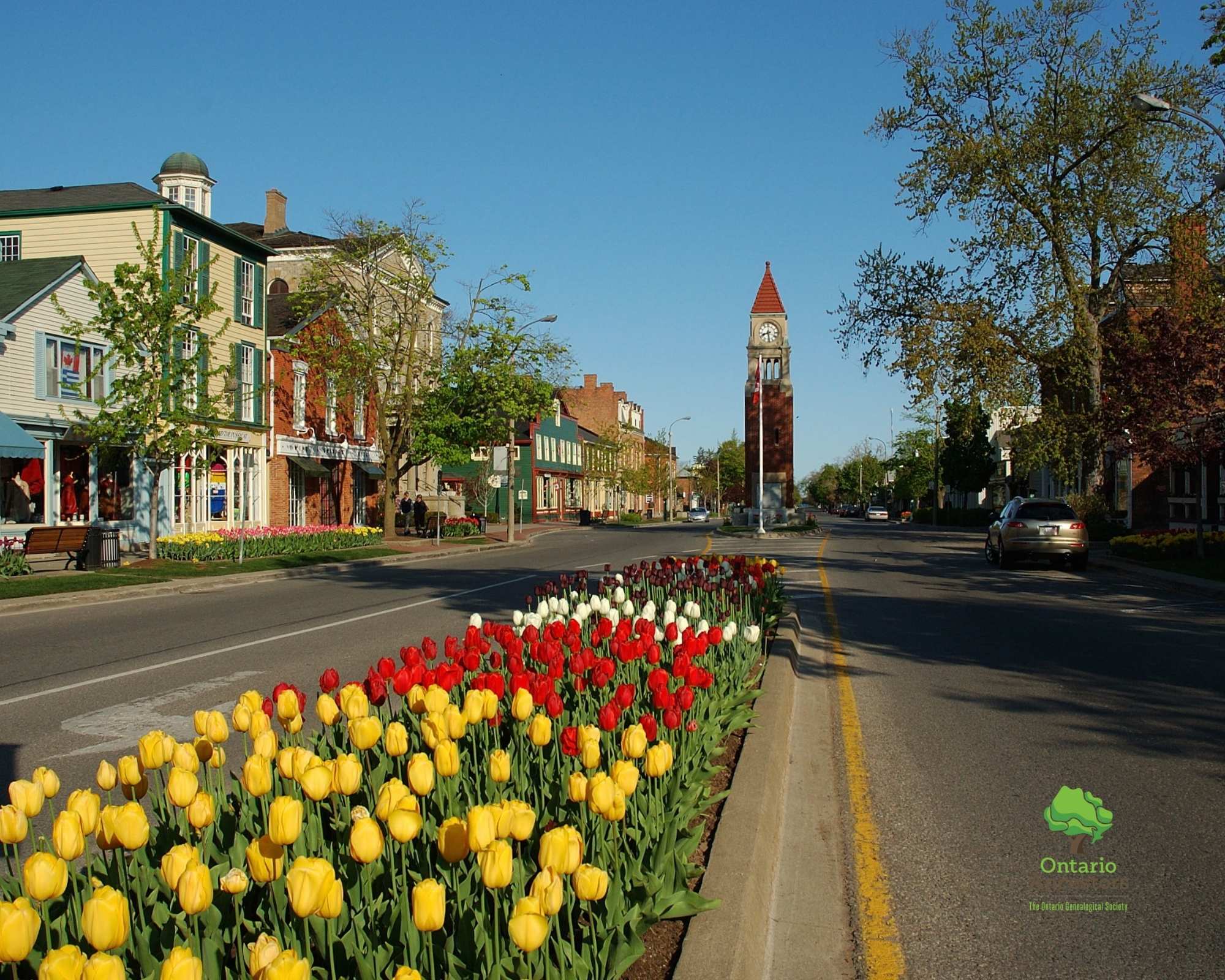
If you think your family line passed through Niagara, local research can make a real difference. Niagara families may appear in church registers, cemetery transcriptions, newspaper notices, county and township histories, local indexes, family files, and other sources that do not always surface in a quick online search. For people trying to document a line for Bill C-3 purposes, local knowledge matters: place-name changes, boundary changes, denomination patterns, migration routes, and family naming patterns can all affect whether the right record is found.
If you believe you have Niagara ancestors, we encourage you to first search our Master Index (for free!), which includes most of our Niagara digital resources for pre-1869 birth-related data. If you find a record of interest, you can consider becoming a member to view it.
If you have exhausted all available resources, we encourage you to submit a research request. A local genealogy society like the Niagara Peninsula Branch of Ontario Ancestors may be able to help you identify likely churches, civil jurisdictions, nearby communities, and substitute sources when a birth or baptism record is difficult to locate.
What a Genealogy Society Can Do, and What it Can’t
A genealogy society like ours can help you search for records, understand local sources, identify likely repositories, and suggest ways to document your family line more clearly. What we cannot do is give a legal opinion on whether your citizenship claim will be accepted, issue certified government copies, or decide whether a particular set of records is legally sufficient for IRCC. We strongly recommend working with an immigration lawyer in cases where legal strategy or proof requirements become more complicated.
That is the best way to think about this process: genealogy and law overlap here, but they are not the same thing. Genealogy can help you find and organize the historical evidence. Legal and immigration professionals can help interpret how that evidence fits the current law and application process.
Common Guestions about Canadian citizenship and Bill C-3
Does Bill C-3 mean I can get Canadian citizenship through a grandparent?
Possibly. Officially, the law is framed through parent-to-child citizenship by descent, but for people born before December 15, 2025, Bill C-3 can restore or confer citizenship in earlier generations, which is why grandparents and even earlier Canadian ancestors may matter in practice.
Do I apply for citizenship or for proof of citizenship?
In many Bill C-3 cases, the important step is applying for a citizenship certificate, which is proof of citizenship, not a standard naturalization application.
What if I cannot find a birth registration?
Keep going. LAC notes that older vital records may be incomplete, some people may not have been recorded at all, and baptisms may happen later than births. Church records, census records, cemetery records, newspapers, and other local sources may still help you document the family line.
Where do I get certified Ontario records?
For Ontario, the Archives of Ontario can provide certified records. The archives hold births to 1919 (births up to 1918 are on Ancestry.com), marriages to 1944 (marriages to 1943 are on Ancestry.com), and deaths to 1954 (deaths to 1953 are on Ancestry.com). Later records are handled through ServiceOntario and the Office of the Registrar General, but Freedom of Information and Privacy rules protect births from 1920 to the present. For earlier records not held by the government, such as baptismal registers, you may need to request an official certificate, extract, or certified copy from the local parish or the appropriate diocesan/church authority.
Reconnect with Your Canadian history
If you are exploring Bill C-3 because you hope to live in Canada, work in Canada, or reconnect with your Canadian family history, start with the records. Family stories are important, but citizenship cases are built on documents. And if your family line runs through Niagara, we invite you to become a member (don’t forget to click “Niagara Peninsula Branch”). Our society may be able to help you locate the records, communities, and local context that bring your Canadian ancestry into focus.
Bill C-3 Application Resources to Get You Started
How To Claim Citizenship
- IRCC Resource: How to Claim Canadian Citizenship by Descent Under Canada’s New Citizenship Act Bill C-3
How To Find Experts To Help Your Search
- Ontario Genealogical Society Branches: https://ogs.on.ca/branches-landing-page/
- We recommend that you work with an immigration lawyer to help “build the unbroken chain” needed for the application. The American Immigration Lawyers Association (AILA) has a tool to help you find someone in your area.
- The Association of Professional Genealogists Canada Chapter has resources to help you hire a professional genealogist. https://apgcan.org/
Official Document Sources
- The Archives of Ontario can provide certified copies of Ontario births to 1919, marriages to 1944 and deaths to 1954. https://www.archives.gov.on.ca/topic/birth-marriage-and-death/
- Some of these records are also available on Ancestry.com: Ontario, Canada Births, 1832-1918, Ontario, Canada, Deaths and Deaths Overseas, 1869-1953, Ontario, Canada, Marriages, 1826-1943. You may need an Ancestry subscription to access them.
- To order birth registrations from 1920 to the present go to this Service Ontario Website and click “6 Certified copy of birth registration.” https://www.ontario.ca/page/get-or-replace-ontario-birth-certificate#section
- Library and Archives Canada (LAC) is official record holder of the Census Records of Canada but you will also find copies on family history sites like FamilySearch and Ancestry. This is the LAC link: https://www.canada.ca/en/library-archives/collection/research-help/genealogy-family-history/censuses/general-guide.html and this link outlines how to order copies of LAC images: https://www.canada.ca/en/library-archives/services/public/copy/online.html
OGS Document Sources
- The Ontario Name Index: https://ogs.on.ca/toni/
- Niagara Branch Lincoln/Welland Master Index: https://niagara.ogs.on.ca/main-index/
- Wesleyan-Methodist Baptism Registration Index. https://ogs.on.ca/wesleyan-methodist-baptismal-register-resource-page/
Parish Records
- Anglican Church records: https://www.ontario.anglican.ca/
- Niagara Anglican records: https://niagaraanglican.ca/
- Wesleyan Methodist baptismal registers (1825–1910), primarily covering Ontario, are largely held by the United Church of Canada Archives in Toronto, which holds the original registers and master index. Digitized, searchable transcriptions are available via the Bower-McBurney Genealogy site, and FamilySearch.
- Roman Catholic records: https://hamiltondiocese.com/ and digitized in the Drouin Collection: https://www.familysearch.org/en/wiki/The_Drouin_Collection:_Six_Databases
Online Genealogy Sites (some of these require a subscription)
- Ancestry.com (paid)
- FamilySearch.org (free)
- FindMyPast (paid)
- MyHeritage (paid)
- Newspapers.com (paid)
- OldNews.com (paid)
- NewspaperArchive.com (paid)
General Genealogy Help Resources
- Getting Started with Your Family Tree: https://niagara.ogs.on.ca/getting-started-with-your-family-tree/
- Family Tree e-newsletter item: How to Find Your Ancestor’s Parents Without Birth or Marriage Certificates: https://familytreemagazine.com/records/vital/find-ancestors-parents/
Blog Articles and Other Resources
- Our recent interview with Spectrum News 1 Buffalo – https://spectrumlocalnews.com/nys/buffalo/news/2026/04/17/now-easier-to-get-canadian-citizenship–ancestry-groups-flooded-with-requests
- This article by a Toronto lawyer explains the background for the changes in applying for Canadian citizenship and the types of records that may be used. One section is titled “Building the Unbroken Chain”. We have no association or knowledge of this law firm and this link is just an example of a lawyer explaining the records. https://atimmigrationlaw.com/bill-c-3-changes-canadian-citizenship-by-descent-rules-opening-doors-for-americans-and-others/
- These two blogs from Ken McKinlay’s Family Tree Knots may offer you some insight. https://familytreeknots.blogspot.com/2026/02/bill-c-3-2025-searching-for-birth-registrations-ontario.html and https://familytreeknots.blogspot.com/2022/10/beginners-guide-finding-ontario-civil-births.html
- These Reddit threads discuss Canadian Citizenship application issues and timelines for response from the archives. https://www.reddit.com/r/Canadiancitizenship/wiki/index/ and https://www.reddit.com/r/Canadiancitizenship/comments/1qy2ytu/timeline_for_archives_of_ontario_request/
- This CBC News article about Bill C 3, Canadian Citizenship by Descent, from March 8, 2026, discusses the volume of requests and the complexities of providing “proof” from a time when legal records may not have been made or may not have survived. https://www.cbc.ca/news/canada/montreal/bill-c-3-canadian-citizenship-by-descent-american-interest-9.7112724
- There are two Canadian Citizenship by Descent (Bill C-3) Facebook groups: https://www.facebook.com/groups/501813032715040 and https://www.facebook.com/groups/1541688993712776